
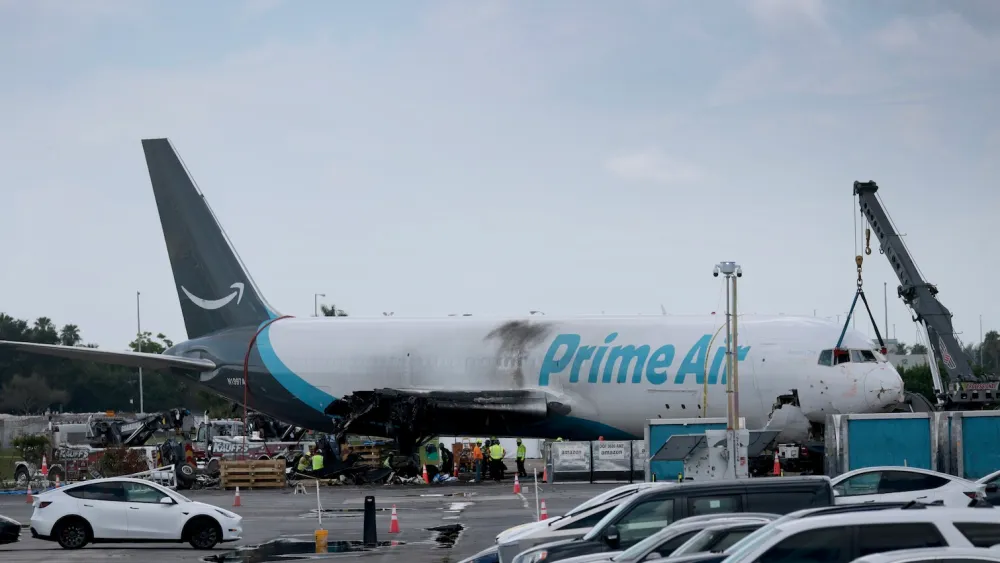
Amazon’s beslutning om at suspendere driften med 21 Air efter månedens dødelige overløb på landingsbanen i Miami forventes ikke at forstyrre Amazons samlede leveringsoperation væsentligt. Men at erstatte selskabets resterende fly, der er dedikeret til Amazon, kan vise sig betydeligt mere kompliceret end blot at ændre disse flys tidsplaner til en anden operatør.
E-handelsgiganten bekræftede beslutningen i søndags, men sagde ikke hvor længe pausen vil vare, eller om den endeligt vil afslutte sit forhold til transportøren. 21 Air har fløjet for Amazon siden november 2024.
Ifølge Tom Crabtree, administrerende direktør hos Transport Research Advisory, udgjorde 21 Air otte af de 106 fragtfly i Amazons kontrollerede netværk pr. udgangen af august. Med ét fly ødelagt i Miami-ulykken fjerner Amazon i praksis syv fly fra sit netværk, mens suspensionen er i kraft.
Det udgør mindre end 7 procent af Amazons flåde, men flyene er ikke nødvendigvis udskiftelige.
“At skaffe otte erstatningsfly af typen 767-300BCF/BDSF er hverken let eller hurtigt i et stramt marked for fragtfly,” sagde Crabtree. “Den online markedsplads kan øge flyvningen med andre underleverandør-transportører eller chartre ekstra kapacitet, sagde han, selvom sidstnævnte kan blive dyrt i begyndelsen af luftfragts højeste sæson, der starter i denne måned.”
Amazon behøver måske ikke at skaffe nye fly, hvis det permanent afslutter sit forhold til 21 Air. Amazon kontrollerer de fly, der håndteres af 21 Air på dets vegne, selv om de underliggende ejerskabs- og leasingaftaler varierer afhængigt af fragtflyet. Det betyder, at 767’erne potentielt kan forblive i Amazons netværk under en anden operatør.
Det kan tage seks til ni måneder for disse fly at blive fuldt omplaceret til en anden operatør, estimeret Derek Lossing, hovedkonsulent hos Cirrus Global Advisors.
“If we assume the total contract is canceled and Amazon needs to redeploy the seven [surviving] aircraft, a best case scenario is all seven aircraft are running in mid-Q3 next year,” Lossing told Sourcing Journal. “It would be close to a year to get the full fleet ported over.”
Air Transport Services Group (ATSG), som driver Amazons fly gennem Air Transport International og ABX Air, ville være den sandsynlige modtager af de fysiske fly, sagde Lossing. Men at overføre fly til en anden operatør kræver tilpasning til den pågældende operatørs driftsparametre og ansættelse af tilstrækkeligt antal piloter til at flyve dem, sagde han.
Jonathan Colehower, administrerende direktør for globale operationer og forsyningskæde hos UST, forventer lignende, at Amazons andre luftpartnere vil overtage en stor del af det forflyttede volumen, men anslår, at fuld absorbing af 21 Airs fragt kan tage seks til otte uger.
That suggests a two-stage disruption: Amazon can likely stabilize the network relatively quickly, but restoring the exact capacity and routing configuration previously provided by 21 Air could take substantially longer.
“There are structural constraints that will also prevent a seamless transition away from Air 21,” said Colehower. “Aircraft type, routes, maintenance locations and crew availability will each represent substantial problems and switching costs for Amazon.”
The company’s multi-carrier model gives it several levers to pull. Alongside 21 Air, Amazon Air’s network includes other partners such as Sun Country Airlines, Hawaiian Airlines, Cargojet, ASL and other direct air carrier partners.
In the immediate term, Amazon can shift some domestic flights to other commercial cargo partners.
“Some of the goods flying domestically on routes like Miami-Cincinnati can be often fulfilled from other Amazon fulfillment centers or flown on other carriers, like UPS,” said Lossing. “Or rather than the customer being offered one-day delivery, they might see a two-day checkout at time of purchase if they have to use a truck to connect volumes.”
The more difficult problem to solve is international deliveries, with 21 Air operating routes into Latin American markets such as Puerto Rico, Colombia, the Dominican Republic and Ecuador where air freight plays a more important role. Those lanes cannot be replaced by moving another Amazon aircraft onto the schedule overnight.
“Running daily service internationally takes months of planning,” Lossing said.
Colehower also pointed to broader capacity constraints in the air freight market.
“Demand is growing faster than air cargo capacity,” Colehower said, citing data from Xeneta. “During the first half of 2026, global air cargo demand increased by around 4 percent, while available capacity expanded by only around 1 percent.”
Lossing does not expect the 21 Air suspension to materially alter Amazon Air’s broader growth trajectory. Even with dozens of aircraft shuttling hundreds of thousands of packages a day, only a small percentage of Amazon’s total package volume moves by air—and an even smaller percentage moves on the aircraft operated by 21 Air.
The crash and subsequent suspension could, however, prompt Amazon to revisit how much control it wants over the operation of its air fleet. Amazon already owns some aircraft, introducing its first fabriksfremstillede Boeing 767-fragtfart last month as part of a move that includes three new 767-300Fs.
But Lossing cautioned against assuming that expanded aircraft ownership correlates with better operational control.
“The real question is, should Amazon be in the business of flying these aircraft?” Lossing said.
Moving pilots onto Amazon’s payroll would not automatically eliminate the operational risks that come with running a cargo airline, he added. Amazon’s contracted carriers operate under the same FAA Part 121 regulatory framework, regardless of whether the pilot is employed by the tech titan or an outside carrier.
